




Sonny Guerrini, 20, had developed an Ewing’s sarcoma tumor near his spinal cord. Because of the location of the tumor, conventional radiotherapy had the danger of wreaking undesirable side effects. Hence, Sonny chose to go for CyberKnife cancer treatment in Turkey which has several major advantages over traditional radiation therapies like Gamma Knife. Medical Tourism Corporation facilitated Sonny’s CyberKnife treatment in Turkey at a very low cost.
For instance, CyberKnife can treat lesions even in areas of the body that move with respiration (like in the case of lung cancer), thanks to advanced image guidance. Also, CyberKnife does not require a head frame screwed into the skull for immobilization, avoiding the pain, headache, nausea, and risk of infection seen sometimes with stereotactic frames like Gamma Knife.
CyberKnife also effectively treats those tumors that were previously thought inoperable, like brain tumors. Other types of cancers that can be treated with CyberKnife are liver, prostate, kidney, liver, neck, spine, lung, and pancreatic cancer.
Sonny, a student at the University of Brisbane, had to go abroad for cancer treatment because Australia doesn’t have a CyberKnife center. Medical Tourism Corporation arranged Sonny’s medical trip to Turkey and took care of his needs at each step. Everything was planned in detail well in advance and Sonny and his family are extremely satisfied with the professionalism of Medical Tourism Corporation and the quality of medical care at Anadolu Medical Center in Turkey.
The cost of CyberKnife treatment in the US can be anywhere between $50,000-$100,000. But Turkey provides very low cost CyberKnife cancer treatment at prices well below $20,000. The quality of the treatment is the same as in the US for the simple reason that the machine used to deliver the treatment is the same. Also, Turkey has very well-qualified and experienced oncologists who speak English fluently. Hence, there is no fear of the low cost of cancer treatment compromising on the quality.
India has become the top international surrogacy destination for couples and even single men and women who have not been able to have children through natural means. The success of the procedure in India, is greatly attributed to the cutting edge technology adopted by the fertility clinics in India, highly qualified fertility specialists, social acceptance of surrogacy, and low cost of surrogacy, all leading to India’s high success rate in gestational surrogacy.
The success rates for ART cycles that use gestational carriers are higher than the success rates for those cycles that do not. However, the age of the ART patient (source of the egg) is a strong predictor of success regardless of whether a gestational carrier is used or not.
2008 India Gestational Surrogacy Success Rate
It is the prerogative of intending parents to seek adequate clinic data on the success rates from the fertility center. (Success rates refer to the number of live births per embryo transfer.) However, it is necessary to understand the way success rates are calculated, because some clinics achieve artificially high figures by simply rejecting the patients who have lower chances of pregnancy.
The first chart depicts the success rate with fresh surrogacy cycles where donor eggs were used.
The second chart demonstrates surrogacy success rates in different categories: self eggs in women less than 35 years, self eggs in women more than 35 years, donor eggs, and same sex couples. The results in the first two categories are compared with U.S. average figures from 2005 (more recent U.S. figures are not available).
Since, India’s success rates match or are sometimes better than U.S. surrogacy success rates, the country is a popular destination for surrogacy. But take care to choose a well-respected fertility clinic and a very qualified and experienced fertility specialist.
The human female is born with about a million eggs and this number does not increase. With age, there is a dip in female fertility.
Egg donation or oocyte donation makes it possible for those women to get pregnant who cannot do so with their own eggs. Older women most often opt for this method of fertility treatment. Attempts to conceive with donor egg IVF have a high rate of success.
What Exactly is Donor Egg IVF?
Donor egg IVF is a fertility treatment or Assisted Reproductive Technology (ART) in which the egg from a donor is subjected to IVF. That is, the egg from the donor is mixed with the sperm from the biological father in the laboratory. If embryos are produced, they are grown in a lab dish and then transferred to the recipient’s uterus. If this results in a pregnancy, the baby thus born will have genetic linkage to the donor of the egg.
Who Qualifies to Receive an Egg?
The criteria for women to qualify to receive eggs are:
Early menopause
Abnormal ovarian reserve
Previous failures to conceive with IVF
Very low egg quality
Genetic disease
Ovaries unresponsive to stimulation
Over the age of 39
The Egg Donation Process
Couples sometimes choose a known donor. Else, it is an anonymous donor. The donor is screened for any diseases like HIV, chlamydia, hepatitis, toxicology testing and other diseases and also certain genetic predispositions. The donor is usually young, not more than 25 years of age, so that the quality of the eggs is high.
The recipient’s menstrual cycle is synchronized with the donor’s by giving the recipient some hormonal drugs. The male partner of the recipient provides a semen sample on the day eggs are retrieved from the donor. The semen and eggs are then fertilized through the in vitro fertilization process.
Embryo transfer is usually done three days after the eggs were retrieved. Ten days after the embryo transfer, the recipient goes through a blood test to check for pregnancy. (The transfer process involves a speculum which is inserted into the vagina to expose the cervix. The embryo/s is/are suspended in fluid and gently placed through a catheter into the womb. This process is done by monitoring it through ultrasound and is usually painless.)
Advantages of Donor Egg IVF
The advantages of donor egg IVF are simply its high chances of success. In fact, donor egg IVF has a much higher success rate when compared to IVF with non-donor. It is the age of the egg that seems to matter more than the womb in which it is planted. By receiving the egg, the recipient replicates in her body the donor’s fertility condition.
Risks of Donor Egg IVF
The recipient stands the risk of contracting a transmittable disease. Though the donor is screened for HIV, such testing may not show anything if the donor has contracted HIV very recently.
Also, with donor egg IVF, there is the chance of multiple births if too many embryos are transferred. Twin births often happen in this method.
Donor Egg IVF in India
India has the advanced infrastructure and qualified fertility specialists required for donor egg IVF treatment. It’s the low cost of donor egg IVF in India that has made it a favorite with couples looking to have babies. India’s medical tourism industry is growing by leaps and bounds because of the quality medical care it offers at unbelievable prices.
Please do keep in mind that donor eggs available in India are only of Indian ethnicity. But people from overseas visiting India for surrogacy or egg donor IVF can always bring an egg donor with them from their country of origin.
Donor egg IVF in India has brought sunshine into the homes of many a childless couple. So go ahead and get some sunshine for yourself!
Obesity is one of the most visible of chronic health conditions and has become an epidemic today. Between half and two-thirds of men and women in 63 countries across five continents – not including the US – were overweight or obese in 2006. (Overweight is BMI > 25 , obese is BMI > 30).
What is obesity?
A person is considered obese when his or her weight is 20% or more above the normal weight. Those who have a BMI over 30 are said to be obese, and those with a BMI of 40 or more are called morbidly obese, that is, their weight severely interferes with their health.
How do people become obese?
Obesity, in most cases, is because of excessive and uncontrolled eating and very little or no physical activity. However, there could be some other responsible factors too, like:
Age. With age, the body metabolizes food slowly.
Gender. Women tend to be more overweight than men.
Genetics. Obesity could run in families
Psychological reason. People experiencing negative emotions like boredom, sadness, or anger tend to eat in excess.
Illness. Certain conditions like hypothyroidism, depression, and some rare brain diseases can make people overeat.
Medication. Steroids and some anti-depressants may cause excessive weight gain.
How can obesity be treated?
Conservative methods of treating obesity like exercising and dieting should always be tried first. Patients will need to be committed to their exercise schedule and diet plans for a significant period of time before they expect results. Such health programs should never be abandoned after the first round of weight loss as weight can come back right away.
Weight loss surgery should be the last resort in the fight against obesity, because any surgery comes with risks and side-effects.
Obesity needs a concerted effort from not only the obese individual but his/her family and friends. And the sooner obesity treatment starts, the better, as it takes a long time for people to lose weight.
Costs of medical procedures in the US and UK can often be too high and seem unaffordable, especially for the un-insured or for procedures not covered by insurance. Same is the case with gall bladder surgery or cholecystectomy. But you can achieve significant cost savings if you opt for gall bladder surgery in Mexico, India, or Costa Rica – all well-established and trusted medical tourism destinations. More about that later; first, a brief medical overview of the condition.
What is gall bladder surgery?
Gall bladder surgery essentially involves the removal of stones from the gall bladder or the gall bladder itself. It is one of the most frequently done operations throughout the world as the gall bladder is thought to be an inessential organ in the body.
How is gall bladder surgery done overseas?
The surgery can be done in two ways: (i) conventional gall bladder surgery; (ii) or laparoscopic surgery.
What are the benefits of laparoscopic cholecystectomy or gall bladder surgery?
The conventional surgery involves a large incision on the abdomen and a few days of hospitalization. The laparoscopic method means usually four small incisions that will hardly leave any distinguishable marks and quicker recovery time.
Laparoscopic cholecystectomy also means lesser pain for the patient and lesser risk of infection.
Recovery time in the conventional method can be up to four weeks, whereas in the laparoscopic method, most patients return to their normal work routine in a week.
Can I get insurance coverage for gall bladder surgery?
Well, yes and no. That’s because some health plans cover gall bladder surgery, and some don’t. So, you need to check on your specific plan. Also, some plans classify gall bladder surgery as a non-emergency and elective procedure. Hence, it requires pre-surgical certification. This, of course, means some hassle for you. Yet other health plans cover a limited portion of the cost, like $2,500 per coverage period per insured person.
Cost of gall bladder surgery
The cost of gall bladder surgery in the US can vary widely from $ 7,000-$ 15,000 and in the UK from £ 3,500 – £ 5,800. This can seem a huge obstacle to the un-insured and even to the insured whose plan does not cover or has limited cover for gall bladder.
This is why more and more people from the West are turning to medical tourism in India, Mexico, and Costa Rica for cheaper alternatives.
In India, Mexico, and Costa Rica, you can get the same gall blader surgery or cholecystectomy done at about half or even one-fourth the price. The cost of gall bladder surgery abroad is cheaper not because of inferior medical care, but other factors like lower cost of labor, infrastructure, etc.
Doctors in India, Mexico, and Costa Rica are most often educated in the US or UK and have also gained some work experience there. Top hospitals in India, Mexico, and Costa Rica follow strict standards on hygiene and embrace the latest technology.
Hence, if you are contemplating gall bladder surgery or cholecystectomy in India, Mexico, or Costa Rica, there is not much room for concern. Go ahead and enjoy a healthier life, and it wont cost you the earth!
Laparascopic adjustable gastric band surgery for teens (adolescent & children under 16 years) is currently not approved by the US FDA. It is true that teen weight loss surgery is a new option and statistics are only now becoming available on this, but till date the results of children having weight loss surgery look very encouraging. Until now, most US teen gastric lap band surgery have been performed in Mexico. Medical Tourism Corporation is one of the rare medical travel facilitator who have experience in assisting lap band for teens overseas.
For example, in a recent study by the New York University School of Medicine, 53 teenagers (41 girls and 12 boys) between the ages of 13 and 17 showed some impressive results after being ‘banded’. The teenagers, who on averaged weighed 297 pounds before surgery and had an average body mass index (BMI) of 47.6, shed some 50 percent of their excess weight 18 months after teen gastric lap band surgery.
Obesity & Kids in the US
Up to a third of American teenagers are obese, according to the American Academy of Child and Adolescent Psychiatry. The numbers are projected to rise to up to 50% in the next few years. This has forced parents and doctors to consider new methods like lap band surgery to tackle teenage obesity.
Child Obesity Trends Worldwide
Studies show an exponential growth in obesity problems among children & teenagers in the next few years globally. If current trends are an indication, by 2010 the projections in rise of percentage of overweight youngsters are as follows:
North & South America:Â about 50% from the 30% today
Europe & UK: 38% from the 25% today
China: about 20% by 2010
Until recently, weight loss surgery for children was frowned upon but that was also because surgery meant gastric bypass. And this procedure carries a small but very real risk of death. This risk, though considered acceptable for many adult patients, is thought to be too high for children.
But the picture has changed since the arrival of lap gastric band surgery on the scene. In the lap band procedure, a silicon band is strapped around the top of the stomach, dramatically decreasing the amount of food the patient can consume at a time. The surgery is minimally invasive and is reversible – significant advantages for children, whose bodies are still forming.
When weighed with the ill effects of obesity like increased risk of heart disease, high blood pressure, diabetes, and breathing problems, the benefits of gastric lap band for children are too great to ignore. But at the same time, it’s important to remember that even lap band is not a magic wand. The success of lap band, to a large extent, depends on the post-operative care.
Obesity in children is brought on by many factors like poor eating habits, lack of exercise, family history of obesity(genetics), depression, etc. Hence, even after the surgery, all care should be taken to instill good eating habits and a healthy lifestyle that includes exercise.
Teen gastric lap band surgery for obese teenagers is becoming popular, not only because of the benefits it brings, but also because the procedure is safe and minimally invasive. Teen Lap band surgery in Mexico is expected to see a big growth.
Same Day or Immediate Load Dental Implants are all the rage in Costa Rica, and for very strong reasons. Medical and dental tourism in Costa Rica is long established and affordable. Hence, even if it’s a single dental implant that you need, Costa Rica is the ideal destination for many reasons.
But before we come to that, let’s see where and how same day dental implants score over their traditional counterparts:
Same Day/Immediate Load Dental Implants Vs. Traditional Implants
Same Day/Immediate Load Dental Implants are:
Quick and convenient: A titanium post is inserted, on which a temporary tooth/crown is placed. Usually the process takes about 15 to 20 minutes.
Osseo integration is quick and in 30 days you have your permanent crown in place.
The Immediate Load Dental implant can be set at an angle, if need be, and removes the need for bone grafting.
Traditional implants are:
Time-consuming and inconvenient: Traditional implants consists of the following steps:
First surgery: the jaw bone is exposed and a 4mm titanium post inserted. Waiting time of about 2 to 6 months until the bone grows around the post.
Second surgery: the tip of the post is exposed and crown attached. If a bone graft is needed, another surgery is done to insert the titanium post adding another 4 to 8 months of healing time. This is very common as traditional implants can only be inserted vertically.
Same Day/Immediate Load Dental Implants Vs. Dentures
Same Day/Immediate Load Dental Implants look and feel geniune: Dental implants look and feel like your own teeth! Since dental implants integrate into the structure of your bone, they prevent bone loss and gum recession that often accompany bridgework and dentures.
Dentures look and feel artificial: Even if you can sometimes fool people with dentures (though not always), they definitely don’t feel like your own teeth.
Same Day/Immediate Load Implants Vs. Bridging
Same Day/Immediate Load Implants preserve teeth: Dental implants do not require that the adjacent teeth be altered in any way. Hence, your healthy teeth are left untouched, which is a significant long-term benefit.
Bridging affects adjacent teeth: In bridgework, some cutting of the adjacent teeth may be required.
Although dental implants are a better option than dental bridges, they may not suit everyone. In such circumstances, in place of the same day dental implant in Costa Rica, you can consider dental bridges that cost an affordable $400 for a full set.
How much do Same Day Dental Implants cost in Costa Rica?
The cost can vary a lot depending on if you want just one implant or many and also depending on where you get it done. In the US and Canada, it could cost anywhere between $2,000 – $4,000. But the same cost can drop drastically to a starting price of $675, if the procedure is done in Costa Rica.
Why get Immediate Load implants done in Costa Rica?
Huge savings of about 50-60%;
Proximity to US and Canada. Hence, you spend minimum time and money on travel;
The established reputation of Costa Rica’s hospitals. The low cost of treatment doesn’t mean a compromise of any sort in the quality of medical care. Costa Rica’s increasing popularity with medical tourists is proof of its high standards;
Costa Rica is so beautiful, it would be a shame to come away without getting a taste of the ‘Pura Vida’ or ‘pure life’. As your dental procedure doesn’t take more than a day, you can easily combine this medical trip with some pleasure. On the whole, it’ll be a wallet-friendly experience worth remembering.
How to get to Costa Rica? Costa Rica is easily accessible by air. All major US and Canadian airlines fly to Costa Rica. Prices of tickets can vary between $400-800, but can drop in low season. US and Canadian citizens need valid passports to go to Costa Rica.
Getting your Same Day/Immediate Load Dental Implant done in Costa Rica is the most affordable way to bring the confidence back in your smile. Go for it!
(Same Day Implant system traces its history to Dr. Per Ingvar Branemark’s pioneering work on dental implants. The implants are now manufactured by a number of companies like Nobel Biocare, Straumann, Biohorizons, etc.) Dental Care Resources:
Belgium is a very popular destination with medical tourists in the Western world, especially for those from the UK. The laparoscopic gastric band surgery or ‘lap band’, in short, done in Belgium is the one of the best options, any which way you look at it.
What is laparoscopic gastric band surgery?
The laparoscopic gastric band surgery or lap band, in short, decreases the size of the stomach pouch. This makes people feel full after they have had just a small meal, and thus helps in losing weight.
Why get the lap band done in Belgium?
Cost: If you are from the UK, lap band surgery in Belgium is the way to go. While the procedure may cost anywhere between £ 9,000 – £ 12,000 in the UK, in Belgium the cost can drop to £ 4,000. This low cost of the surgery does not mean that quality of healthcare is compromised in any way.
Quality: Obesity surgery is carried out in many countries in the world. However, there are few countries with the same experience and success rate in obesity surgery as Belgium. Many Belgian hospitals have a very long tradition of surgical experience in obesity surgery and treatments. Laparoscopy, in fact, is one of the specialties of Belgian medical tourism. Every Gastric Band or Gastric Bypass is done by laparoscopy (unless technically impossible) and this means a very short stay in hospital.
Also, in general, Belgium has always been known for its high hygiene standards and use of latest technology. In a recent study by The World Markets Research Centre, Belgium ranked top for medical purposes out of 175 countries, not least because secondary infection rates average less than 0.5% compared with around 10% in the UK.
The high level of Belgium’s surgical expertise comes from many years of training imparted to its doctors: all doctors are trained for a minimum of seven years and specialists for 12 years.
Follow-up care: Many Belgium doctors have a follow-up network in neighboring countries like UK and Ireland. Hence, do check if your doctor or hospital offers such a service.
No queues: Forget the long waiting lines of NHS. For a weight loss surgery in Belgium, you choose the date for the operation after all initial screenings, and get yourself banded. As simple as that.
Proximity to UK: You can choose to go to Belgium by air, road or rail. There is the fast and convenient Eurostar train service from London (all tickets from London allow you free onward travel within Belgium) and an easy-to-navigate public transport network in Belgium. Major European highways like the E-19, E-17, E-40, E-411 and E-313 pass through Belgium. You can also get to Belgium from all over Europe on Eurolines coaches.
Climate and language: The climate is similar to UK’s, with slightly hotter summers and colder winters. The official languages spoken are Dutch, French, and German, but many people speak English, too.
All in all, getting gastric lap band surgery in Belgium is a good option for someone looking for a high quality and affordable weight loss procedure in Europe.
Many patients from the West (United States, Canada, Great Britain, Ireland) these days travel to India for sleeve gastrectomy surgery,mainly because of the low cost, experienced bariatric surgeons, quality hospitals and no wait times.
This weight loss surgery is also known as Gastric Sleeve Surgery, Gastric Sleeve Resection, Vertical Sleeve Gastrectomy , Laparoscopic Sleeve Gastrectomy, Gastric Tube, Vertical Gastroplasty, Greater Curvature Gastrectomy, Parietal Gastrectomy, Gastric Reduction, and Sleeve Gastroplasty to name a few.
This surgery reduces stomach size, so the individual feels full quickly with a small meal. Â It also restricts the production of the hunger-causing hormone.
Some reasons why this surgery is becoming so popular is the positive clinical feedback from patients who have had this procedure in the last few years. Unlike a lap band there is no need for repeated doctor visits for any device adjustments or fills, absence of mal absorption unlike a gastric bypass, and the weight loss surgery patients in this case are allowed most foods (although in small quantities). A country by country cost comparison forsleeve gastrectomy cost comparisons:
(only the best bariatric surgeons and hospitals are considered for the below prices):
India: US $7,000 (Harvard Medical-affiliated JCI-accredited hospital)
Costa Rica: US $9,500 (Tulane Medical School-affiliated JCI-accredited hospital)
Mexico: US $5,200 to $11,500 (Top hospitals; more than 50% of WLS patients are from the US)
Not only is the cost of obesity surgery lower in India, but the level of service is also very high. For example, good bariatric centers in India keep the patient in the hospital for three to four days after the gastric sleeve procedure with close monitoring. In other countries, the patient is usually sent home or to a hotel a day or two after the sleeve surgery.
Why would anyone want to settle for a clinic or a surgery center for a gastric sleeve surgery in the USA, UK or Canada, when paying a fraction of that amount they can avail the procedure at a JCI (Joint Commission International)-accredited quality hospital in India. Also, when that hospital is affiliated to Harvard Medical in the USA.
Why would anyone not want an experienced bariatric surgeon who has performed thousands of advanced laparoscopic weight loss surgeries at a fraction of the price in the West? When the surgeon also happens to be trained in France and the US and is a Preceptor (Proctor) of American Society of Bariatric Surgeons, the choice becomes all the more easier, doesn’t it?
When you compare the high costs and long wait times in many Western countries with the advantages of getting the surgery done in India, you will see that the latter is a very good alternative for patients looking abroad for Sleeve Gastrectomy. Other countries where you get similar advantages are Mexico and Costa Rica. These are countries with an abundance of bariatric experts, highly accredited hospitals and a track record of satisfied and happy patients from all over the world.
Sleeve gastrectomy surgery in India is poised to gain more popularity with the growing worldwide epidemic of obesity. Also, the demand for this bariatric procedure will grow within India too as changing lifestyles and dietary habits (moving towards Western lifestyles) is making way for obesity.
Surrogate mothers in India cost considerably lower (about, a fourth of what they would cost in the United States). The cost of surrogacy in the United States is approximately $50,000 to $100,000.
Surrogacy in India has fewer legal hassles and a Government organization – Indian Council of Medical Research (ICMR) has set national guidelines to regulate it. Unlike many countries where surrogacy is banned or has many restrictions, India’s laws allow the surrogate mother to sign away her rights to the baby as soon as the baby is delivered.
Surrogacy is a God-sent option for women having trouble conceiving. The procedure uses IVF technology, except for the fact that the embryo is planted in the uterus of a surrogate mother, who can successfully carry the pregnancy to term.
Approximate Surrogacy Cycle Cost at a reputed hospital in India is about US $ 22 to 35k. It includes
Doctor Charges
Surrogate Work up
Antenatal Care
Delivery Charges
Surrogate compensation
Drugs and Consumables.
This does not include the cost of IVF / ICSI. IVF cost in India is about US $ 2,000. ICSI cost in India is about US $ 2,500. FYI, in India even more cheaper surrogacy options are available, but not advisable, due to potential higher medical quality issues.
Additionally, what works in favor of India, unlike some developing countries, is the availability of advanced health care facilities and doctors who speak English. Surrogacy in India is about a half a billion dollar business.
Remuneration is not the only reason for easy availability of Surrogate mothers in India, there is also a heartfelt desire to help others with the joys of parenthood and is an accepted practice in many communities there.
Surrogacy Procedure
The first step is to decide on the best the kind of surrogacy . There two types of surrogacy – genetic and gestational.
Genetic(Traditional) Surrogacy: The surrogate is the genetic mother of the resulting child. In this the surrogate is artificially inseminated with the father(or a male sperm donor). Genetic surrogacy is simpler compared to gestational surrogacy.
Gestational Surrogacy: In this the surrogate is not the genetic mother of the resulting child. The eggs(oocytes) are extracted from the mother(or egg donor) and mixed with the sperm from the father(sperm donor) in-vitro(in a test-tube, culture plate or similar vessel) that has an environment that will simulate that of the fallopian tubes. The embryo is then transferred into the surrogate’s uterus.
In detail, in case of gestational surrogacy, the donor is prepared by administering follicle stimulating (hormonal) medications to stimulate the production of eggs. This procedure takes about 4-6 weeks. These medications cause more than one egg to mature and they will be retrieved before they are released. These retrieved eggs are then fertilized by the sperm in a Petri dish in an incubator.
When the fertilized eggs reach the four to ten cell stage of development; they are called embryos and are ready to be placed in the womb of the surrogate, which is simultaneously prepared to receive the embryo so that it could be carried to term.
Not all eggs which are retrieved get fertilized and not all of the fertilized eggs are used in the current IVF cycle. Some of the embryos are cryopreserved for future IVF procedures.
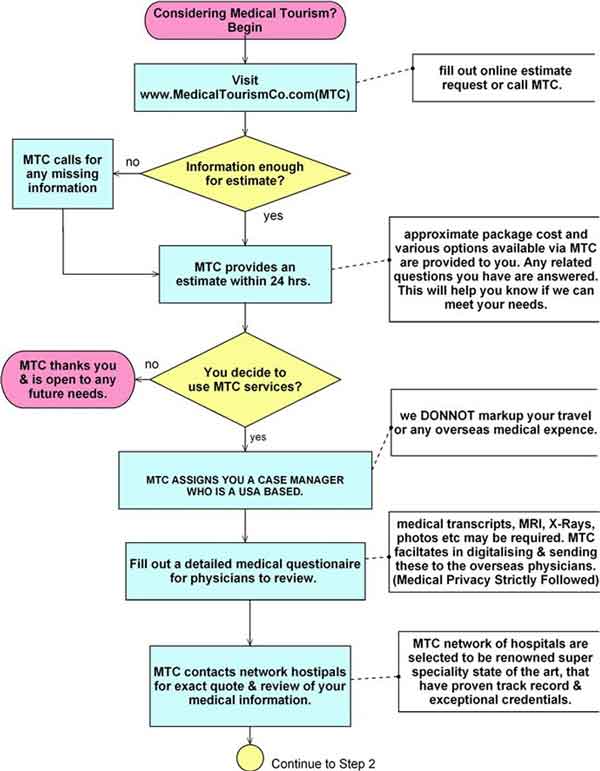
We at Medical Tourism Corporation will be glad to facilitate your needs related to Surrogate mothers in India. Fill out an estimate request for for more information on your needs related to surrogacy in India.